.png?length=100&name=tlc%20icon%20(1).png)
.jpg?width=5272&height=2962&name=HubbellHomes_Lifestyle%20Photos_GlynnVillage_August2023-2%20(2).jpg)
Amenity-Rich Community Living in Greater Omaha
What this guide covers
• What “amenity-rich living” really means in Greater Omaha
• The types of amenities buyers expect in new Omaha-area communities
• How TLC designs neighborhoods around everyday lifestyle, not just lot counts
• How to compare amenity-rich communities across Bennington, Gretna, Papillion, Elkhorn, Omaha, Bellevue, and Ashland.
1What “amenity-rich living” really means in Greater Omaha
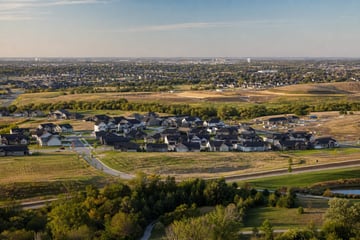
Amenity-rich community living in Greater Omaha means your neighborhood does more than provide a driveway and a backyard — it gives you places to walk, play, gather, and unwind without driving across town. Buyers are looking for trails that connect to real destinations, parks that feel safe and inviting, and shared spaces that make it easy to meet neighbors and enjoy Nebraska’s four true seasons. The Land Company designs its communities with those expectations in mind, planning homesites, streets, and open space together so every day feels a little more connected.
In TLC neighborhoods, amenities are not an afterthought. From ponds and greenways in Bennington’s Anchor View and Morgan Ridge to trail connections and recreation access in Gretna’s Remington West and Sterling Chase, each community is shaped around how people actually live. In Papillion’s Sumtur Crossing and Shadow Creek, for example, homesites are oriented to take advantage of nearby parks and regional amenities, while in Ashland’s Iron Horse, golf and outdoor recreation are part of the community fabric. Across the metro — including Omaha’s Deer Creek Highlands and Elkhorn’sArcadia Ridge — families are choosing subdivisions where they can get outside quickly, send kids to play within sight of home, and enjoy a sense of place that lasts beyond move-in day.
External examples around the metro underscore how important amenities have become. Large mixed-use projects like Heartwood Preserve highlight how trails, open space, and gathering areas drive interest and long-term value; its Heartwood Greenways system is profiled at Heartwood Greenways. In North Omaha, the new Girard Trail Connection is transforming an old rail corridor into a paved link between neighborhoods and recreation, as covered by KMTV in The new Girard Trail Connection. These projects show the same principle that guides TLC’s work: when you invest in trails, parks, and shared spaces, you invest in the everyday quality of life for the people who call a neighborhood home.
In this guide, we will unpack which amenities matter most in Greater Omaha, how The Land Company plans them into its subdivisions from day one, and what to look for when you are choosing where to live.
2The types of amenities buyers expect in new Omaha-area communities
Amenity-rich living means more than just having “a park somewhere in the neighborhood.” For Omaha-area buyers, it usually includes a combination of connected sidewalks and trails, usable green space, play areas, water features, and gathering spots sized for everyday life. A simple playground tucked between backyards will feel very different from a true pocket park with benches, trees, and a direct link to a trail. Likewise, a pond that is only there to manage stormwater reads differently than one with a walking path and views planned into surrounding homesites.
3How TLC designs neighborhoods around everyday lifestyle, not just lot counts
In TLC communities, we start by asking how families will actually use the neighborhood. That might mean morning walks along a trail loop in Anchor Pointe, kids riding bikes around a quiet street pattern in Morgan Ridge, or quick after-dinner strolls to open space in Shadow Creek. We design around those routines, making sure sidewalks connect logically, crossings feel safe, and shared spaces are visible enough to feel welcoming but not so exposed that they lose their sense of calm. In Gretna’s Remington West and Sterling Chase, for instance, the broader city amenities — like Gretna Crossing Park and nearby recreation areas — shape how residents spend weekends even as neighborhood-scale parks and greenways handle the day-to-day.
4How to compare amenity-rich communities across Bennington, Gretna, Papillion, Elkhorn, Omaha, Bellevue, and Ashland
Amenity-rich living also includes less obvious details like lighting, seating, and transitions between public and private space. A trail that passes behind backyards without screening can feel intrusive; one that uses gentle grading, landscaping, and good sightlines can feel like an asset. The same is true for ponds: when shorelines, slopes, and planting are handled thoughtfully, these features offer views, wildlife interest, and a sense of openness that makes lots feel larger.
Regionally, we see similar thinking in projects like Heartwood Preserve. Its Greenways system — described at Heartwood Greenways — weaves eight miles of trails and 80 acres of open space into a larger mixed-use plan, with water features, seating areas, and play spaces integrated throughout. In North Omaha, the Girard Trail Connection — highlighted at The new Girard Trail Connection — turns an abandoned rail corridor into a paved path that links neighborhoods and recreation. Both examples show how amenities can knit communities together at a larger scale, just as TLC does within each subdivision.
Amenity-rich communities across Greater Omaha also reflect different buyer priorities. Some buyers put a neighborhood pool or clubhouse at the top of their list. Others care more about walkable access to regional trails, nearby golf, or school and park networks. In Papillion and Bellevue, for example, many families focus on proximity to Walnut Creek Recreation Area, local sports complexes, and key employment centers, then look for subdivisions that also offer trails, ponds, and play spaces close to home. TLC’s Sumtur Crossing and Shadow Creek align with that pattern, placing homesites where residents can take advantage of both neighborhood-scale features and city amenities.
In Bennington and Elkhorn, the draw is often a combination of schools, open views, and a more suburban feel. Communities like Anchor Pointe, Anchor View, Kempten Creek, and Arcadia Ridge offer varied homesite types — including walk-outs along ponds or open space — so buyers can decide whether their version of amenity-rich living means a deep backyard, a trail just beyond the fence, or a quiet cul-de-sac close to a park. In Ashland’s Iron Horse, the story leans into golf and outdoor recreation, with homesites and shared space shaped around fairways, water features, and views that encourage residents to be outside year-round.
As you compare Greater Omaha suburbs, it can help to pair TLC’s community information with broader neighborhood guides. External resources like neighborhood and amenity roundups, or coverage of projects such as Heartwood’s Greenways and North Omaha’s Girard Trail Connection, provide context on how the metro is investing in parks and trails as core infrastructure. When you see that larger picture and then walk TLC communities on the ground, you will be able to tell quickly which neighborhoods truly deliver amenity-rich living and which ones just use the phrase in marketing.
FAQs
Q: Do amenity-rich communities always cost more?
A: Not always. While homesites near ponds, parks, or trailheads often carry a premium, many TLC communities balance a mix of interior and amenity-adjacent lots so buyers with different budgets can still enjoy the same neighborhood features. HOA dues that support long-term maintenance are an important part of the equation, but they also help protect community value over time.
Q: How do I know if an amenity will really get used?
A: Picture a typical week in your household and be honest about which features you would actually visit. If your kids love playgrounds and you walk daily, a community with trails and parks will likely see heavy use. If you rarely swim, a pool may be less critical than nearby green space or a shorter drive to work. Touring neighborhoods at different times of day can reveal which amenities attract real activity.
Q: Are amenities only about recreation?
A: No. Thoughtful amenity planning also includes sidewalks, lighting, stormwater features, and gathering spaces that shape how safe and connected a neighborhood feels. TLC communities are designed around real life, with trails, ponds, and open spaces that support everyday routines as much as occasional events.
Q: How early should I factor amenities into my homesite search?
A: From the beginning. Because you can repaint walls but cannot move a park, it makes sense to shortlist communities and homesites based on the amenity network first, then choose floorplans and finishes that fit your budget within those areas.
Q: Where can I see examples of amenity-rich communities in Greater Omaha?
A: Visit TLC neighborhoods like Anchor Pointe, Kempten Creek, Sumtur Crossing, and Shadow Creek in person, and complement those visits with regional examples such as Heartwood Preserve’s Greenways and the Girard Trail Connection. Seeing how different projects handle trails, parks, and open space will sharpen your eye for what works best for your family.
Latest from the Blog
Explore expert resources on Omaha homesites, land development, community planning, and neighborhood growth. Browse guides for home buyers, landowners, and builders throughout the Greater Omaha area.
.jpg?length=360&name=HubbellHomes_Lifestyle%20Photos_GlynnVillage_August2023-2%20(2).jpg)
.jpg?length=360&name=Web_Version_Drone-Origin_Rural%20Drone_2023%20(14).jpg)