
The State of Land Development in Greater Omaha: Trends and Outlook
.png?length=100&name=tlc%20icon%20(1).png)
The State of Land Development in Greater Omaha: Trends and Outlook
What this guide covers
The state of land development in Greater Omaha is defined by steady demand, rising expectations, and a maturing inventory of truly buildable sites. For homesite buyers and builder partners, the key questions are straightforward: How much room does Omaha really have to grow? What will future lots look like—and cost? And how can you make smart decisions today that still feel right ten years from now?
1How Greater Omaha’s land development pipeline shapes future homesite supply
The short answer is encouraging. Greater Omaha continues to attract people, jobs, and investment, and the region still benefits from some of the lowest overall building costs among large U.S. metros. At the same time, the “easy” development land—close to existing infrastructure, schools, and employment centers—is being used up, and construction costs have climbed. That combination makes it more important than ever to work with a land developer who understands Omaha’s topography, entitlement path, and long-term needs.
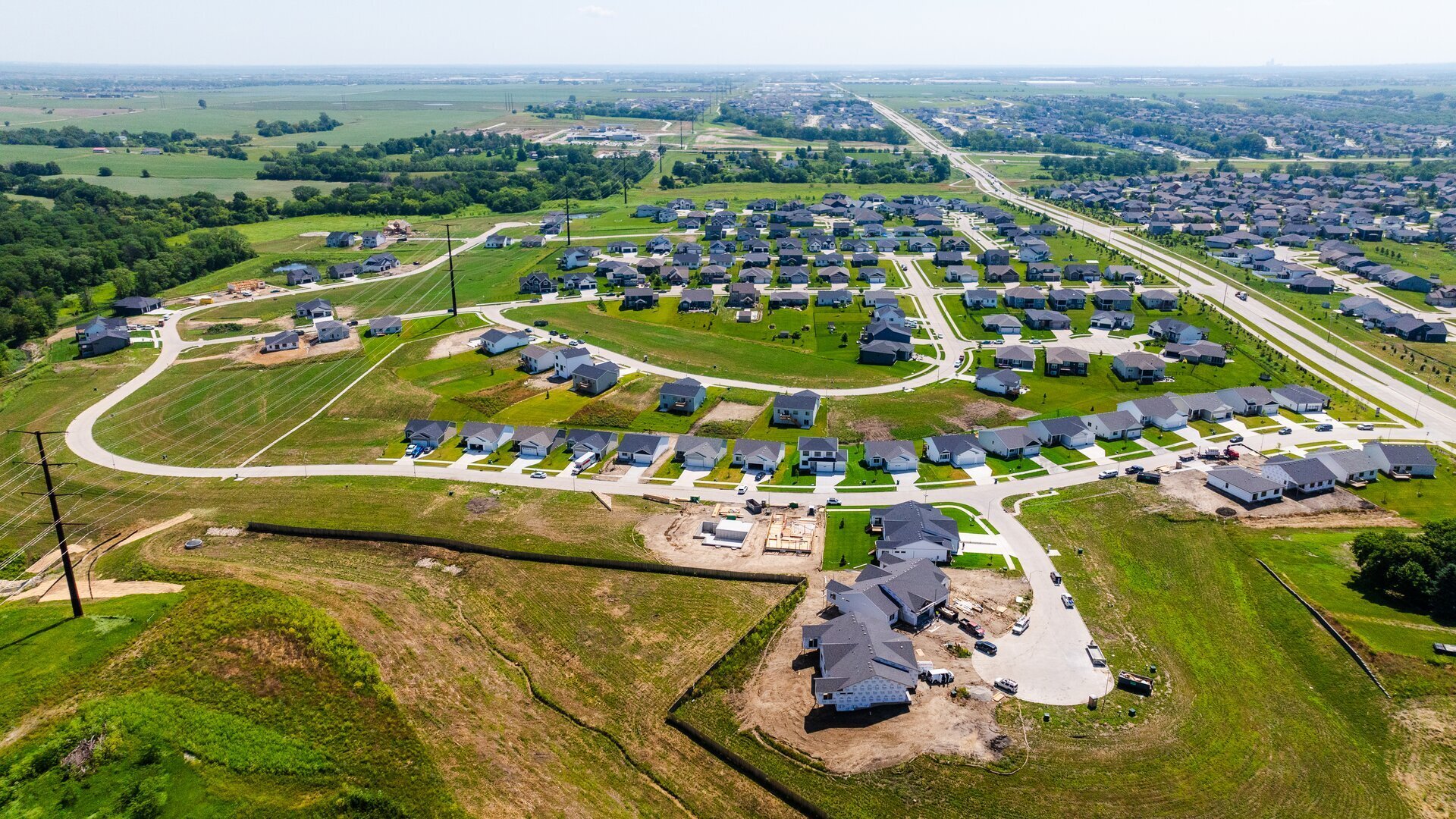
As a land developer focused exclusively on the Greater Omaha market, The Land Company sits at the center of that story. Our work across 22-plus subdivisions and 5,000-plus residential and commercial sites—spanning communities like Anchor Pointe, Kempten Creek, Morgan Ridge, Belle Lago, Arcadia Ridge, Remington West, Sterling Chase, Sumtur Crossing, Shadow Creek, Deer Creek Highlands, and Iron Horse—gives us a front-row view of how the region is growing. In this guide, we will unpack what we are seeing in the land pipeline, explain how those trends affect finished homesites, and share practical takeaways for both B2B builder partners and B2C homesite buyers.
Within the first few hundred words, it is also helpful to acknowledge how broader economic and planning conversations frame Omaha’s future. Regional economic leaders have spent years working to identify and certify “development-ready” sites that meet modern standards for infrastructure and risk reduction—a theme highlighted in the Greater Omaha Chamber’s coverage of its GO Ready site program at Removing the Guesswork: GO Ready Sites Are Powering Business Growth in Greater Omaha. City planners and local media have also begun talking more openly about how Omaha should handle the next several decades of growth as today’s greenfield supply is gradually absorbed. In the sections that follow, we will connect those high-level conversations to what you see on the ground in TLC communities—and to the choices you can make about where, when, and how to build.
2What current land, housing, and construction trends mean for builders and buyers
Greater Omaha’s land market does not move in a straight line. Instead, it cycles through phases where land is plentiful and reasonably priced, followed by periods when prime homesite locations feel scarce and more expensive. Right now, the region is in a middle ground: overall land prices have rebounded from the uncertainty of 2021–2023, but buyers and builders are more selective and cost-conscious than they were during the last boom.
For The Land Company, that environment reinforces the value of disciplined planning and long-term partnerships. Independent research from Omaha-based commercial experts shows how this plays out in the numbers. A five-year review of land sales by Investors Realty found that total acres sold in the metro peaked in 2024, with 2025 showing fewer acres and deals but higher average price points per transaction. In their words, the market has shifted toward “fewer deals, bigger dollars,” as developers focus on the best-located, most developable sites rather than every parcel that hits the market. You can see that analysis in more depth at Omaha Land Sales Trends: A Five-Year Look and 2025 Outlook.
At the same time, construction costs have continued to put upward pressure on finished homesite pricing. National data summarized in tools like the Construction Cost Hub for Omaha show that material input prices for steel, aluminum, and concrete-based products rose again between 2024 and 2025, with overall construction input costs up roughly 6% year over year. Local contractors are building escalation clauses and contingencies into bids to manage that volatility; you can dig into those cost trends at Omaha Construction Cost Trends 2024–2025.
For homesite buyers and builder partners, these forces show up in two places: the base price of a finished lot and the cost to bring homes out of the ground. When material and labor costs climb, it becomes even more important that the underlying land is well planned, efficiently engineered, and aligned with real buyer demand. That is where TLC’s focus on walk-out homesites, amenity-rich communities, and Greater Omaha-specific entitlement expertise helps offset some of the pressure. Instead of paying a premium for land that still requires difficult grading, complicated offsite work, or uncertain approvals, our partners step into communities where those hurdles have already been cleared.
3Why walk-out homesites and amenity-rich planning are central to Omaha’s future
Zooming out, it is also important to look at how land and housing trends intersect. Recent housing-market recaps for Omaha show home prices continuing to rise modestly, with median sale prices up around 5% year over year and days on market still relatively low. Analytics from sources like Redfin’s Omaha housing dashboard, which reports a median sale price near $283,000 and typical market times under three weeks, confirm that demand for well-located homes remains strong even as interest rates and inflation have challenged affordability. You can view those current indicators at Omaha Housing Market: House Prices & Trends.
In that context, Greater Omaha’s competitive advantage is that it still offers relatively low construction costs compared with many U.S. metros. Industry research shared by Pro Builder notes that Omaha has some of the lowest average building costs per new housing unit among large metros, at roughly $172,000 in 2024 versus a national average above $260,000. That cost-efficiency is one reason the region continues to attract employers, residents, and investment; you can explore that comparison at Housing Markets Where Building Costs Are the Lowest.
4How The Land Company helps reduce risk from dirt to development
For TLC, the takeaway is simple: thoughtful land development can amplify Omaha’s cost advantage while protecting long-term community quality. By concentrating on sites that make sense for infrastructure, schools, and everyday commutes—and by engineering neighborhoods where walk-out homesites, green space, and HOA planning are built in—we help builders and buyers capture the benefits of a strong, steadily growing market instead of feeling squeezed by its challenges.
As you think about buying a homesite or launching your next community with The Land Company, it helps to connect market trends to the decisions you can make today. The following questions come up often with both builder partners and B2C homesite buyers who want to understand how land development realities will shape their options over the next decade.
FAQ's
As you think about buying a homesite or launching your next community with The Land Company, it helps to connect market trends to the decisions you can make today. The following questions come up often with both builder partners and B2C homesite buyers who want to understand how land development realities will shape their options over the next decade.
Q: Is Greater Omaha running out of land for new neighborhoods?
A: No—but the easiest, most obvious sites will not last forever. City planners have noted that Omaha’s current growth patterns could use up today’s greenfield inventory over the next few decades, which is why public and private partners are already talking about more efficient land use and strategic growth. A recent Omaha World-Herald piece, for example, highlighted how the city is planning for long-term development as easily served land becomes scarcer; you can see that coverage at Omaha will run out of land to develop in the next 30 years. Here's the city's plan. TLC’s role is to identify and shape the next generation of viable residential sites so builders and buyers have strong choices even as the metro grows.
Q: How do rising construction costs affect finished homesite pricing?
A: Higher material and labor costs increase the total cost of delivering a build-ready lot, from underground utilities to streets, grading, and stormwater systems. That is why you may see lot prices adjust as input costs shift. However, Greater Omaha still benefits from some of the lowest per-unit construction costs among major metros, which helps keep finished homesites relatively attainable. Choosing a well-engineered TLC community helps ensure that dollars are going into lasting infrastructure and amenities, not solving avoidable problems.
Q: Are walk-out homesites more sensitive to market cycles than standard lots?
A: Walk-out homesites almost always hold their appeal because they combine natural light, flexible lower levels, and better backyard connections. In tighter markets, they may command a smaller premium over standard lots, but they rarely lose their position as “hero” sites within a subdivision. In stronger markets, demand for walk-outs can intensify, especially in communities with ponds, trails, or tree lines behind the homes.
Q: What should builders consider before committing to a new block of lots?
A: Look beyond the purchase price. Evaluate grading, drainage, utility locations, and HOA structures, and ask how the subdivision aligns with your product and buyers. TLC’s builder-focused guides—such as our resources on evaluating finished homesites and understanding HOA planning—are designed to make those conversations easier and more transparent.
Q: How can homesite buyers and small builders stay informed about Omaha land trends?
A: Pair local insights from partners like The Land Company with third-party data from the Greater Omaha Chamber, Investors Realty, and housing-market dashboards. Annual reports and barometer studies, like the Chamber’s metro comparison reports at Greater Omaha Chamber Barometer Report, add helpful context about how the region stacks up on growth, investment, and competitiveness.
Ultimately, the state of land development in Greater Omaha is a story of steady opportunity rather than boom-and-bust drama. For builders, that means a market where well-planned communities and strong partnerships can succeed through multiple cycles. For homesite buyers, it means that choosing the right developer, neighborhood, and lot will matter more than trying to time the market perfectly. TLC exists to make those choices clearer—so that whether you build now or five years from now, your corner of Greater Omaha feels like it was worth the wait.
Latest from the Blog
Explore expert resources on Omaha homesites, land development, community planning, and neighborhood growth. Browse guides for home buyers, landowners, and builders throughout the Greater Omaha area.
.jpg?length=360&name=HubbellHomes_Lifestyle%20Photos_GlynnVillage_August2023-2%20(2).jpg)
.jpg?length=360&name=Web_Version_Drone-Origin_Rural%20Drone_2023%20(14).jpg)